Before making a decision, ask yourself these three questions: questions related to "change"/做決定之前,該問自己哪幾個問題 · 三個關於「變」的問題
- WenLaoshi
- 7月18日
- 讀畢需時 3 分鐘

Three Questions About "Change" — Before Deciding
I-Ching has another name — Book of Changes.
The title is the whole answer.
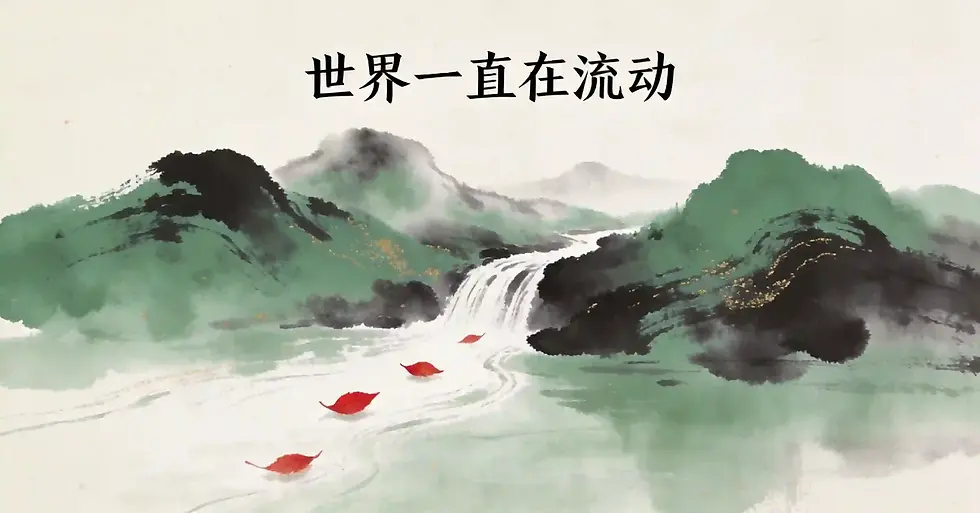
It repeats one thing — the world keeps moving.
You think you are making a "decision." You are actually responding to a "change".
Most people ask the same questions when deciding:
"Which option is better?" "Which pays more?" "Which is safer?"
Ancient people did not ask this way.
Book of Changes teaches you three questions about "change."
Question 1: Where is this thing in its own "timing"?
Everything has its four seasons. Sprout in sprouting time. Harvest in harvest time.
Asking "should I harvest yet" in spring — the answer is always "no."
Not because the options are wrong. Because the timing is off.
Question 2: In this change, what actually changed and what did not?
Most people panic at change because they default to "everything is different now."
Actually every change has an unchanged half.
Changed jobs — industry did not change. Moved cities — profession did not change. Ended a relationship — you did not change.
Seeing "the unchanged half" gives you a coordinate system.
Question 3: What am I willing to pay for this change?
Change is not free. Every change collects a "cover charge."
The question is not "is this change good." It is — am I willing to pay this cover.
Willing to pay — go. Not willing — stay.
A hundred times clearer than "should I."
Ray Dalio Principles — one line most readers skip:
"Painful problems are just an opportunity to identify the principle."
Translated into Book of Changes language — this change did not come to punish you. It came to ask you "what do you actually believe."
Someone who went bankrupt in 2008 and someone who went bankrupt in 2020 — different answers.
Not because the scale was different. Because their responses each time were different.
Change is asking you. Every response you give writes your answer.
So before deciding, do not rush to "which do I pick."
Ask these three change questions first — timing, unchanged half, what am I willing to pay.
After asking, you will usually find —
The choice is not the problem. You already have the answer.
Change is just waiting for you to admit it.
————————————————————————————————————————————————————
開場 · 3000 年前那本書的書名
《易經》有另一個名字,叫《變化之書》。
書名就是全書的答案。
它反反復複只講一件事——世界一直在動。
你以為你在做一個"決定",其實你在應對一次"變化"。
反轉 · 你問的都是選項,古人問的是「變」
多數人做決定時問的問題,都長得差不多——
"哪個選項好?""哪個賺得多?""哪個穩?"
古人不這麼問。
《變化之書》教你問三個關於「變」的問題。
第一問:這件事的「時」,現在處於什麼位置?
任何一件事都有它的四季。萌芽期做萌芽期的事,成熟期做成熟期的事。
你在春天問"是不是該收割了",答案永遠是"不是"。
不是因為選項錯,是因為時不對。
第二問:這次變化裏,什麼變了,什麼沒變?
多數人一遇到變化就慌,是因為把"全都變了"當默認預設。
其實任何變化都有一部分沒變。
工作換了,行業沒換。城市換了,專業沒換。感情結束了,你自己沒換。
看清"沒變的那一半",你就有了坐標系。
第三問:我準備好為這次變化付什麼?
變化不是免費的。每一次變化都在收「入場費」。
你要問的不是"這次變化好不好",是——我願不願意為這次變化付這個價。
願意付的,就去。不願意付的,就留。
比"該不該"清楚一百倍。
跨界 · 達利歐的"原則"裏那句被忽略的話
你聽說過橋水基金的達利歐。
《原則》那本書被翻爛了。多數人記住"極度透明、極度求真"。
但他有一句話被大多數讀者忽略:
"Painful problems are just an opportunity to identify the principle."(痛苦的問題只是讓你識別原則的機會。)
翻譯成《變化之書》的語言——這次變化不是來懲罰你,是來問你"你到底信什麼"。
同一個人,2008 年金融危機裏破產的,和 2020 年疫情裏破產的,答案不一樣。
不是因為規模不一樣。是因為他每次的回答不一樣。
變化在問你。你每次的回答,都在寫你的答案。
收束 · 決定不是終點,是變化中的一次回應
所以,做決定之前,先別急著問"我該怎麼選"。
先問這三個關於「變」的問題——時機、什麼沒變、我願意付什麼。
問完這三個,你多半發現——
選擇已經不是問題。你早就有答案。
只是變化在等你敢承認。


留言